
© Dr Anurag S. Agarwal Eye Clinic.
Powered by PRAZONE Web Solutions
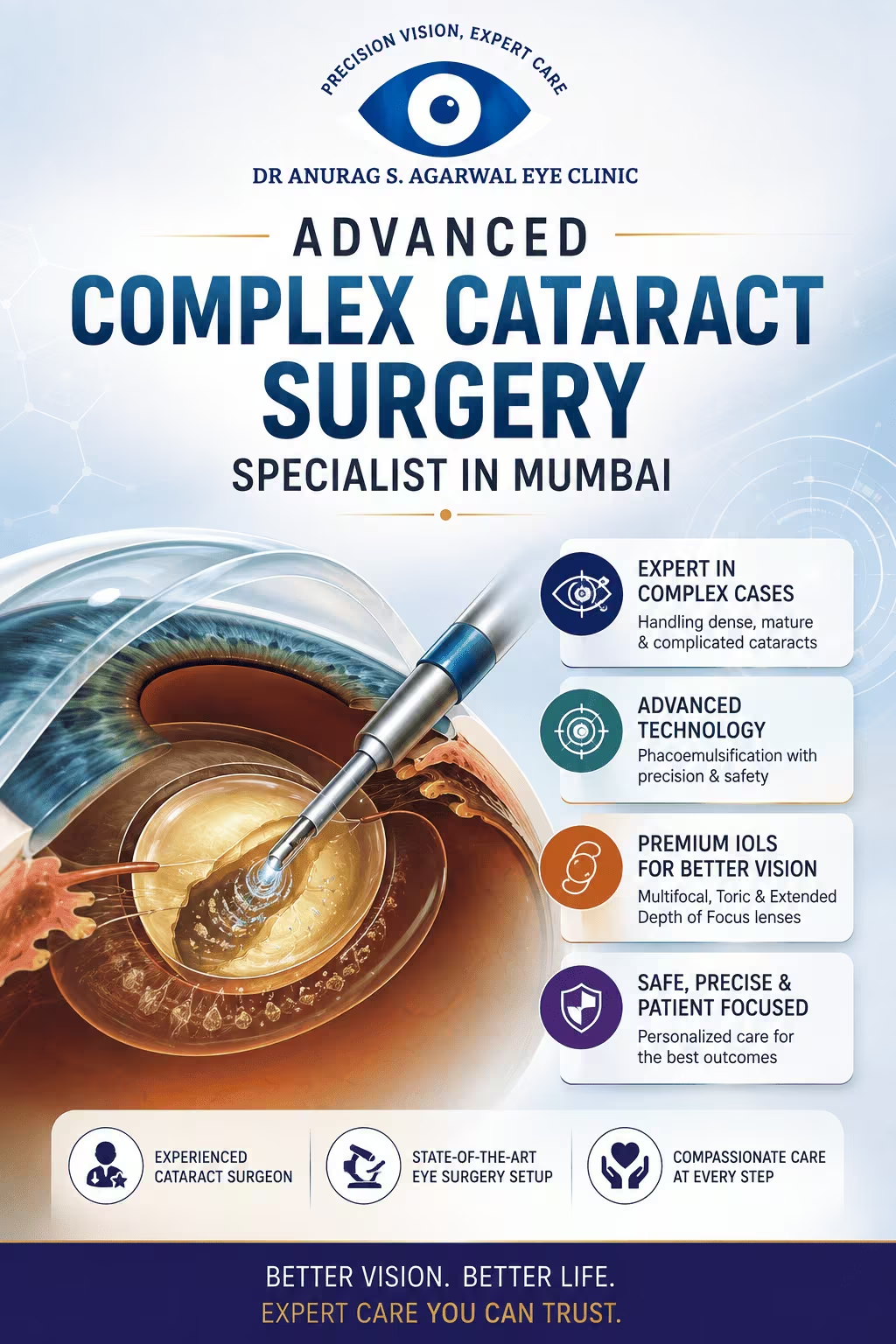
Dr. Anurag S. Agarwal is a senior ophthalmologist in Mumbai specializing in advanced cataract surgery for complex cases (e.g. dense/mature cataracts, diabetic eyes, uveitis-related cataracts). We offer cutting-edge techniques (micro-phacoemulsification with chopping, femtosecond laser-assisted steps, and MSICS for very hard lenses) and premium IOL options (monofocal, toric, multifocal/trifocal, EDOF) to restore vision. Our clinics in Borivali, Goregaon, Malad, Kandivali, and Andheri use modern diagnostics (biometry, OCT, endothelial specular microscopy) for precise planning. This page covers cataract causes, indications for surgery, pre-op evaluation, surgical methods for difficult cases (pupil expansion, capsular rings, vitrectomy techniques), IOL comparisons, expected outcomes/risks, and post-op care. We emphasize patient safety, realistic expectations, and value – offering cost-effective solutions (like SICS) alongside premium care.
A cataract is a clouding of the eye’s natural lens that impairs vision. Globally, cataract and refractive errors are the leading causes of vision impairment. In India, cataract causes two-thirds of blindness (≈66%). Common symptoms include blurred vision, faded colors, glare/halos, and difficulty in low light. Modern cataract surgery is highly effective: it removes the opaque lens and replaces it with a clear artificial intraocular lens (IOL) to restore vision. Surgery is recommended when vision loss significantly interferes with daily activities despite glasses or contact lenses. We counsel patients on realistic goals: many achieve 20/20 to 20/40 vision if the retina and optic nerve are healthy; if there are other eye diseases (e.g. diabetic retinopathy or glaucoma) outcomes may be limited to “functional” vision.
Key Points: Cataracts most often arise with age, but can follow trauma, steroid use, diabetes, or inflammation. In Mumbai’s elderly population, timely surgery is crucial to prevent falls or blindness. Specialized high-volume clinics and accredited hospitals in Borivali, Goregaon, Malad, Kandivali, and Andheri are equipped to manage even difficult cases with advanced equipment and protocols.
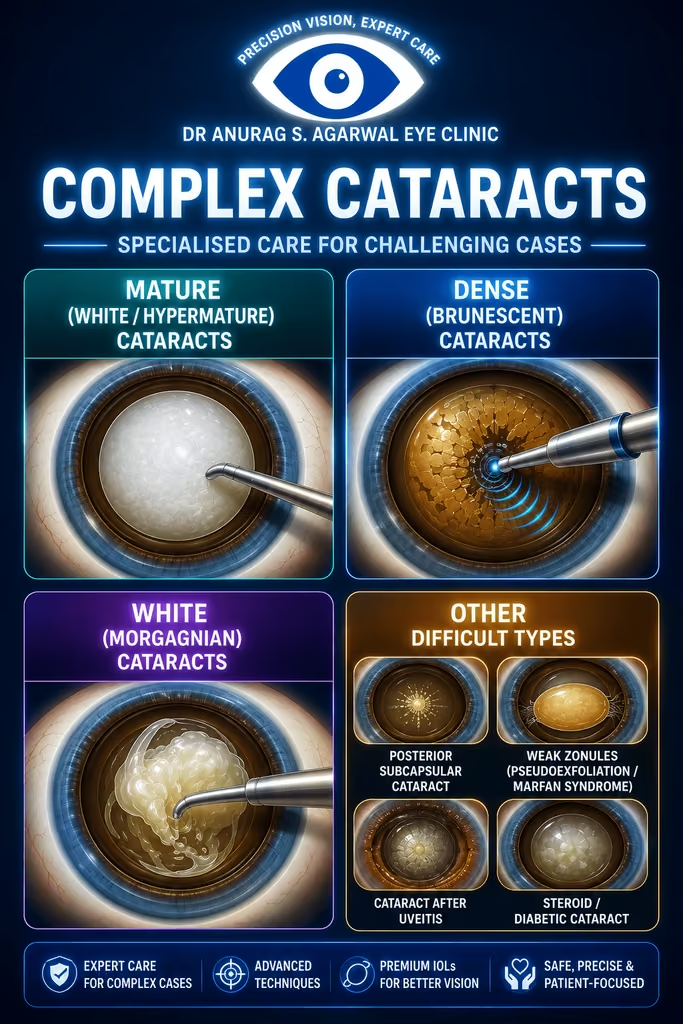
Some cataracts present special challenges due to their type or associated conditions. We classify “complex” cataracts surgical strategy:
The lens becomes totally opaque and often swollen. A hypermature cataract can build internal pressure (“intumescent”) and risk a capsule tear during entry. We address this by very careful capsulorhexis (often staining the capsule with trypan blue) and slow aspiration to decompress the lens before phacoemulsification.
Extremely hard, brown nuclei require more ultrasound energy to break up. We use techniques like phaco-chop to minimize energy delivered inside the eye. For rock-hard cases, we consider manual small-incision cataract surgery (MSICS), which avoids ultrasound entirely.
The lens protein can liquefy, making the cortex very soft. These can cause lens matter to shoot forward when the anterior capsule is opened (“Argentinian flag” sign). We often aspirate some fluid before phaco.
Posterior subcapsular cataracts (common in steroids/diabetes), cataracts with weak zonules (pseudoexfoliation or Marfan syndrome), or those following uveitis. Each requires additional planning.
Any cataract causing visual acuity worse than ~6/18 (20/60) or severe symptoms (double vision, glare, frequent prescription changes) warrants surgery.
We ensure any comorbid eye disease (glaucoma, macular degeneration, diabetic retinopathy) is stabilized first. Inflammatory cases must have quiescent uveitis for ≥3 months before surgery.

Every patient undergoes a comprehensive pre-op assessment to plan complex cataract surgery safely:
We review systemic health (diabetes, hypertension), medications (steroids, alpha-blockers like tamsulosin), prior eye surgeries, and cataract symptoms. On exam we measure visual acuity, refraction, intraocular pressure, and perform a detailed slit-lamp exam to inspect for pseudoexfoliation, zonular laxity, anterior chamber depth, and lens density. A dilated fundus exam (or B-scan if hazy) rules out retinal detachment or macular pathology.
We obtain optical biometry (IOLMaster) and keratometry, using special formulas or corneal tomography for prior refractive surgeries. Specular microscopy assesses endothelial counts in dense cataracts or Fuchs dystrophy. Macular OCT evaluates diabetic macular edema, while anterior segment OCT evaluates corneal scars or Descemet detachments. Visual field and retinal nerve fiber scans detect glaucoma risks.
Poorly controlled diabetes is optimized, and cardiology clearance is obtained if needed for sedation. Patients are advised to stop blood thinners per protocol. Preoperative counseling includes setting realistic expectations, reviewing premium versus monofocal IOL options, and clarifying all financial aspects.
Dr. Agarwal uses state-of-the-art techniques tailored to each challenging scenario. The general principle is “achieve lens removal with minimal trauma.”
We use 2.2–2.8 mm incisions with modern phaco machines. In hard cataracts, chopping techniques split the nucleus mechanically to lower cumulative dissipated energy (CDE). We protect the cornea using dispersive ophthalmic viscoelastic via the soft-shell technique, reapplying it frequently to safeguard the endothelium.
When appropriate, we utilize femtosecond laser for perfectly centered capsulotomy and lens pre-fragmentation. This reduces the ultrasound energy required for dense nuclei and allows for precise limbal relaxing incisions to correct astigmatism, especially beneficial in white cataracts.
In extremely hard brunescent or hypermature cataracts, MSICS delivers the lens nucleus intact or manually chopped through a ~6–7 mm self-sealing scleral tunnel. It eliminates ultrasound entirely, significantly lowering the risk of endothelial damage in dense rock-hard cases.
For pupils resistant to pharmacological dilation (from diabetes, uveitis, or medications), mechanical aids like iris hooks or Malyugin expansion rings gently enlarge and stabilize the pupil margin, preventing iris prolapse and intraoperative damage.
In compromised zonules (pseudoexfoliation, Marfan syndrome), we place a Capsular Tension Ring (CTR) or sutured segments to redistribute forces evenly. For severe deficits, alternative fixation methods like scleral-fixated or glued IOLs are utilized.
If capsule tears occur, prompt anterior or pars plana vitrectomy clears vitreous traction. For intumescent white cataracts, we employ continuous infusion, hypotony, and controlled rhexis to prevent the "Argentinian flag" sign and maintain chamber stability.
Throughout surgery, our priority is minimizing energy and trauma. Frequent viscoelastic application and manual techniques protect the endothelium.
After lens removal, the selected IOL is positioned safely. Procedures typically last 15–20 minutes under topical or peribulbar anesthesia.
Choosing the right IOL is crucial for vision quality. Below is a comparison of common IOL types, their pros and cons, and suitability:
| IOL Type | Advantages | Disadvantages | Suitability |
|---|---|---|---|
| Monofocal | Sharp vision at one distance (usually far); cost-effective; minimal visual side effects. | Requires glasses for near and/or intermediate tasks. | Patients content with glasses for reading/intermediate; stable vision; any age. |
| Multifocal (Bifocal) | Provides functional near and distance vision without glasses in many patients. | May cause glare/halos at night; less contrast sensitivity; some adapt slowly. | Active patients wanting reduced glasses use; no glaucoma/macular issues. |
| Trifocal | Extends clear vision to near, intermediate, and distance; ~90% spectacle-independence. | Higher cost; can still have halos/glare; requires neural adaptation. | Patients desiring maximal glasses freedom; no ocular comorbidities. |
| Toric | Corrects astigmatism plus distance vision; ideal for cylindrical errors. | Must be precisely aligned (rotation reduces effect); higher cost than standard mono. | Patients with moderate/high corneal astigmatism; any base vision goal. |
| EDOF | Continuous focus range (distance–intermediate) with fewer halos than multifocals. | May not provide full sharpness at near (reading glasses often needed); premium cost. | Patients wanting extended range with fewer nighttime dysphotopsias. |
These standard IOLs give excellent distance vision focusing at one set point (typically infinity). Most patients still need reading glasses after surgery. They offer the fewest visual disturbances and are ideal if cost or frequent night driving is a priority.
Premium options with multiple concentric zones built into the optic. Modern trifocals (such as PanOptix) achieve complete spectacle independence in ~90% of cases. We carefully evaluate candidate retinas and discuss minor night vision halos during pre-op counseling.
Specifically engineered to neutralize significant corneal astigmatism. Available across monofocal and multifocal designs, toric lenses provide superior uncorrected clarity compared to non-toric lenses when aligned precisely on the steep corneal axis.
Lenses like Symfony provide an elongated focus channel for smooth transitions from distance through intermediate computer ranges. They produce fewer night halos than multifocals, though very small near print may still require light readers.
Personalized Consultation: We often tailor combinations (e.g., monofocal in one eye and EDOF in the other) based on individual lifestyle requirements and visual demands.
Complex cataracts present technical hurdles that require proactive surgical strategies:
Dense or white cataracts diminish the red reflex. We utilize high-intensity coaxial lighting and Trypan Blue anterior capsule stain for sharp visualization during capsulorhexis.
Beyond mechanical expanders (hooks/Malyugin rings), we use intracameral mydriatics (phenylephrine/epinephrine) and visco-dilation to maintain working pupillary space without iris trauma.
Capsular tension rings (CTRs) are pre-placed to redistribute bag tension. We minimize fluid turbulence and use 3-piece or scleral-fixated lenses whenever capsular bag support is severely deficient.
Prompt anterior vitrectomy removes vitreous traction immediately. A 3-piece IOL is positioned securely in the ciliary sulcus or planned for scleral fixation to ensure optimal visual outcomes.
We limit cumulative ultrasound energy, apply dispersive viscoelastics to protect endothelial cells, and utilize topical hyperosmotics postoperatively for vulnerable corneas or Fuchs' dystrophy.
Our track record in complicated cases is built on anticipating structural pitfalls, utilizing modern chandelier endoillumination, and executing specialized backup protocols.
Modern complex cataract surgery achieves significant visual restoration with structured risk management:
Most patients achieve 20/20–20/40 functional vision depending on preexisting ocular health (glaucoma or maculopathy). Premium IOLs provide ~90% glasses independence with proper healing time.
Severe complications (infection/detachment) occur in well under 1%. Common transient issues like corneal edema and mild inflammation are managed with standard tapering steroid regimens.
High Patient Satisfaction: Patients readily adapt to minor night halos in exchange for sharp, glasses-free daytime independence for reading, computing, and driving.
A comprehensive recovery protocol ensures optimal healing and long-term visual stability:
Day 1 confirms intraocular pressure and incision closure. By Week 1, early visual recovery is tested, sutures are evaluated, and eye shield use is adjusted.
Month 1 establishes final refraction and glasses prescription. Month 3 evaluates capsular clarity; quick YAG laser capsulotomy is offered if PCO develops.
Follow a 4-week antibiotic-steroid drop taper. Avoid heavy lifting, eye rubbing, or swimming. Report severe pain, sudden vision loss, or light flashes immediately.
We every surgical strategy to safely accommodate systemic conditions, advanced age, and complex ocular profiles.
Advanced age is not a contraindication—prevalence rises steeply after age 60, with ~70% of people over 80 having cataracts. We routinely operate on seniors to restore functional independence and reduce fall risks, managing concurrent conditions like macular degeneration or glaucoma alongside surgery.
Diabetes accelerates cataract development. Dr. Anurag Agarwal ensures diabetic retinopathy is stabilized with lasers or injections prior to surgery. Because post-op inflammation can trigger macular edema, we manage steroid regimens judiciously and schedule early post-op OCT scans.
Patients with uveitis require a completely “quiet eye” before operating, while glaucoma cases need rigorous intraocular pressure regulation. In post-corneal transplant eyes, combined cataract and DMEK surgery may be considered to preserve low endothelial counts.
Specialised Surgical Care: Thorough pre-operative evaluation guides every step. We do not turn away high-risk cases; instead, we adapt medications, incision techniques, and adjunct devices to ensure maximum patient safety.

We recognize that cost is a concern for many. In Mumbai, cataract surgery ranges widely (from ~₹25,000 for basic phaco with monofocal IOL to ₹150,000+ for premium lenses and laser). We emphasize value over mere price:
A “Clear Visionary” Journey Ahead
Through precision and expertise, Dr. Anurag Agarwal, the esteemed Advanced Complex Cataract Surgery Specialist in Mumbai (Goregaon Clinic),guides patients toward a future of restored vision and enhanced quality of life.
Book Your Consultation Today!
For comprehensive guidance and expert care, Schedule a Consultation with Dr. Anurag Agarwal to embark on a journey toward a clearer vision and a brighter future.
Best Hospital for Cataract in Goregaon Malad Borivali Mumbai with the latest advancement in Specs Removal by Laser Vision Correction. cataracts cause vision impairment by clouding the eye’s lens. Common symptoms include blurred vision, faded colours, and light sensitivity. Cataracts can stem from age, trauma, radiation, or childhood conditions. Cataract surgery, offered by Dr. Anurag Agarwal in Mumbai, removes the clouded lens and replaces it with an artificial one, improving vision. Multifocal Cataract Lenses are available to remove refractive errors.
Our facilities are conveniently located near Borivali (Apex Hospital), Goregaon Jain Hospital, Malad (Criticare Asia), Kandivali making it easy for families across Mumbai to access care. Each center has modern operating theaters with phaco machines, lasers, OCT, and lab equipment. We follow strict infection-control protocols (antibiotic ointment at end of surgery, pre-op povidone iodine, etc.) and have anesthesiologists available for safe sedation.
Finally, we offer patient-friendly policies: emergency support line (24/7 contact), transparent second-opinion consultations, and free follow-up adjustments. Dr. Agarwal’s emphasis is on “service before self” – ensuring every patient receives individualized attention and achieves the best possible vision.
Complex cataracts include very hard (brunescent) lenses, fully mature white cataracts, or those with conditions like zonular weakness (pseudoexfoliation) or small pupils. Surgery uses advanced tactics: we might use a larger incision (MSICS) for rock-hard lenses, employ pupil expanders for tiny pupils, or place capsular tension rings to support weak zonules. The underlying principles remain the same, but surgery is adapted to be safer and more effective in these difficult cases
A mature cataract often looks completely white on red reflex testing and causes very poor vision (sometimes light perception only). Patients notice very blurry, whitish vision. An ophthalmologist confirms by slit-lamp exam. If the lens is swollen (intumescent), there is more risk of intraoperative capsule pressure; we handle these carefully to prevent complications.
Yes, diabetics can have excellent outcomes, but extra precautions are taken. We ensure any diabetic retinopathy is treated first. Diabetics have a slightly higher risk of macular edema after surgery, so we use steroid/NSAID drops and monitor the macula. Controlling blood sugar around the time of surgery also helps. Many diabetic patients regain clear vision after cataract removal, as long as their retina is managed.
Femtosecond laser-assisted cataract surgery (FLACS) uses a computer-guided laser to make the lens opening and pre-break the nucleus. It offers extra precision, especially useful in complex eyes (hard lens, small pupil, or to correct astigmatism). It’s available in select Mumbai centers (e.g. Goregaon) and often bundled in premium packages. Candidates include those wanting very accurate outcomes or patients with certain complex features (e.g. intumescent cataract) where a precise capsulotomy is beneficial.
The hardness of the cataract doesn’t dictate IOL choice directly. What matters is visual needs and corneal astigmatism. For example, a hard cataract patient with astigmatism might benefit from a toric IOL (corrects astigmatism). If they want to reduce glasses, a multifocal or EDOF IOL could be used if they have healthy eyes. Otherwise, a standard monofocal IOL (sharp distance vision, plus glasses for reading) is the safest and most affordable choice.
Most patients notice vision improvement within days, but we advise a gradual recovery schedule. The eye surface and vision stabilize over 4–6 weeks. We typically see you on Day 1, Week 1, 1 Month, and 3 Months. By 1–3 months, you’ll have your final glasses prescription. Good outcomes require compliance with eye drops and precautions, but the overall downtime is minimal (light activities in a few days, normal life within a week or two).
The cost varies mainly by hospital fees and lens type. A basic phaco surgery with a monofocal lens is the least expensive option. Premium IOLs (multifocal, toric, laser-assisted steps) add to the cost. Operating room charges differ by facility and accreditations (NABH-accredited hospitals may charge more). We provide a range of choices: for budget cases we might do MSICS in a charitable camp setting (very affordable), whereas high-end laser suites with premium IOLs cost more. We always quote a package in advance and explain each component.
Premium lenses can benefit seniors who are healthy otherwise, but glaucoma or retinal disease are usually contraindications for multifocals because reduced contrast (due to glaucoma or macular changes) combined with multifocal optics can reduce quality of vision. Seniors without eye disease often do well with premium IOLs, enjoying glasses-free living. We evaluate each case: if there’s any retinal compromise or very advanced glaucoma, we recommend a monofocal or EDOF IOL instead.
You can book online through call/WhatsApp +91‑9833413151. Our clinic is located in Borivali (near Apex Hospital) and Dr. Agarwal also consults at Goregaon (Jain Hospital), Malad (Criticare Asia), Kandivali and Andheri. We offer appointments, second opinions, and emergency referrals. During the visit, Dr. Agarwal will review your records (vision, imaging) and discuss the best plan.
Dr. Anurag Agarwal’s clinics in Goregaon and Kandivali are known for balancing quality and affordability. For example, our MSICS procedures keep costs low while maintaining high standards. You can mention your budget concerns during consultation, and we can tailor a surgical plan (technique and lens choice) that offers maximum value without compromising safety or outcomes.
Book an Appointment with
Dr Anurag S. Agarwal Eye Clinic
Eye - Evaluation / Treatment
Visited For Eye treatment
Visited For Laser Procedures for Retinal Diseases
Visited For Cataract
Visited For Cataract Surgery