
© Dr Anurag S. Agarwal Eye Clinic. Privacy Policy
Powered by PRAZONE Web Solutions
As a team of experienced ophthalmologists practicing in Mumbai for over 22 years, we understand that choosing the right cataract lens can be confusing for many patients. In this comprehensive guide, we aim to explain the different types of cataract lenses available, their benefits, and how to select the best lens based on your age, lifestyle, and visual needs. Our goal is to help you make an informed decision about your cataract surgery and achieve the best possible vision outcome.
During cataract surgery, the cloudy natural lens of your eye is removed and replaced with an artificial lens called an intraocular lens (IOL). This lens becomes a permanent part of your eye and plays a crucial role in determining your vision quality after surgery. The type of lens you choose can significantly impact your daily activities, from reading and driving to using computers and enjoying hobbies.
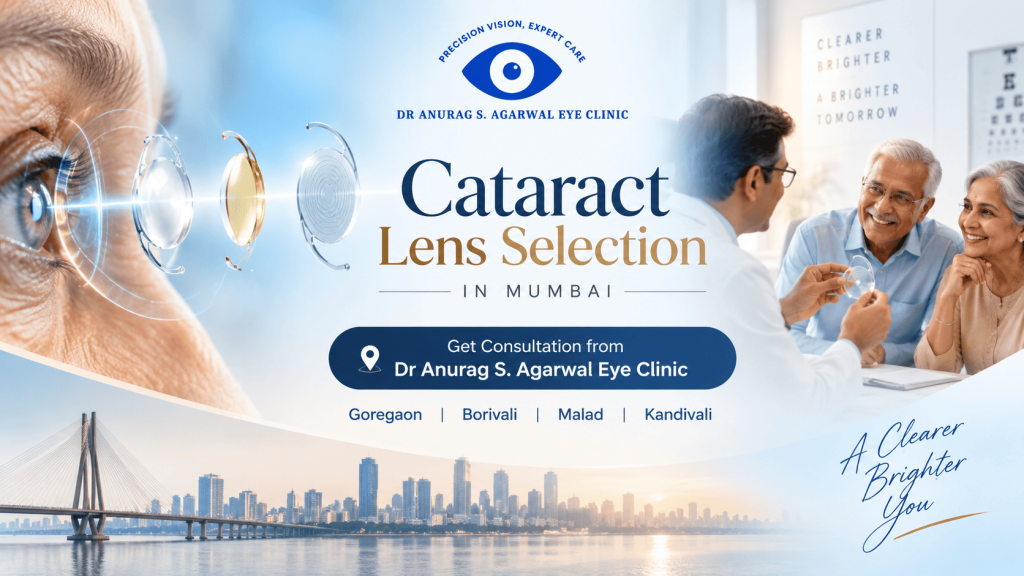
Comprehensive guidance by Senior Eye Surgeon Dr. Anurag S. Agarwal to help you select the ideal vision solution.
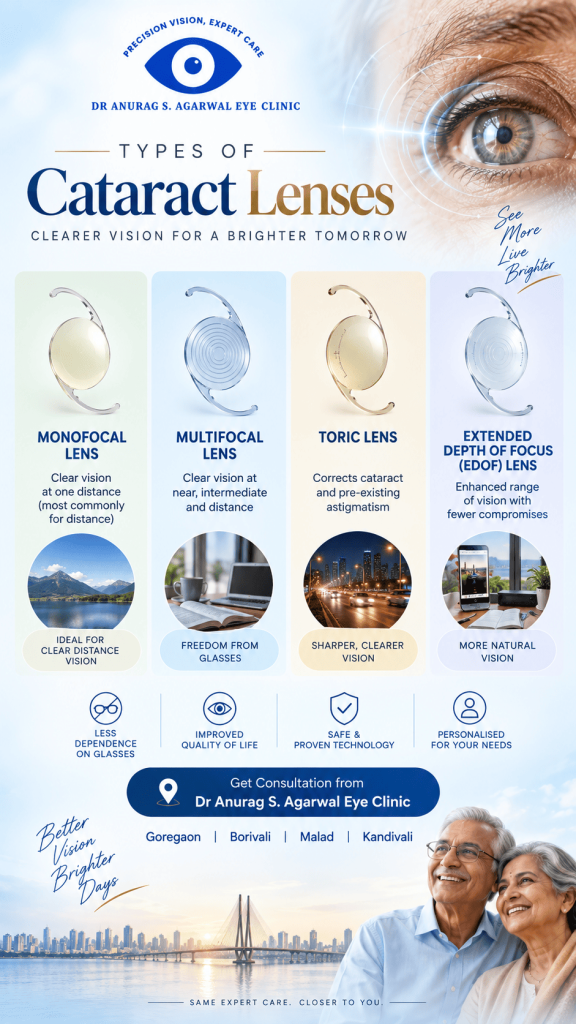
Younger, more active patients who engage in various activities may benefit more from trifocal or EDOF lenses, as they provide greater independence from glasses. Older patients with simpler visual needs may find monofocal lenses perfectly adequate.
Consider your daily activities and hobbies. If you spend significant time reading, using computers, or doing detailed work, multifocal or trifocal lenses may be beneficial. If you primarily need good distance vision for driving and watching television, monofocal lenses may suffice.
Professionals who work extensively with computers, architects, artists, or those who frequently drive at night should discuss their specific needs with their ophthalmologist to determine the most suitable lens option.
Patients with certain eye conditions, such as macular degeneration, glaucoma, or severe dry eyes, may not be good candidates for premium multifocal lenses. We will thoroughly evaluate your eye health to recommend the most appropriate lens type.
Premium lenses like trifocal and EDOF lenses cost more than standard monofocal lenses and may not be fully covered by insurance. Consider your budget and discuss payment options with our team.
If you have astigmatism, toric lenses may be necessary to achieve the best visual outcome, regardless of whether you choose monofocal or multifocal technology.
Some patients adapt easily to multifocal lenses, while others may find the adjustment period challenging. Discuss your expectations openly with your ophthalmologist to ensure you choose a lens that aligns with your visual goals.
| Lens Type | Vision Range | Glasses Dependency | Cost | Best For |
|---|---|---|---|---|
| Monofocal | One distance (usually far) | High (reading glasses needed) | Lower | Simple visual needs, budget-conscious patients |
| Bifocal | Two distances (far and near) | Moderate (may need for intermediate) | Higher | Reading and distance activities |
| Trifocal | Three distances (far, intermediate, near) | Low to none | Highest | Active lifestyle, varied visual demands |
| EDOF | Distance to intermediate | Moderate (may need for reading) | Higher | Computer work, daily activities |
| Toric | Corrects astigmatism | Depends on base lens type | Higher | Patients with astigmatism |
At our practice, we follow a comprehensive evaluation process to help you choose the right cataract lens. This includes detailed eye examinations, lifestyle assessments, and discussions about your visual goals and expectations. We consider your age, occupation, hobbies, and any existing eye conditions to provide personalized recommendations.
Q: Can I have different lens types in each eye?
A: Yes, in some cases, patients may benefit from having different lens types in each eye, a technique called monovision or blended vision. This approach is carefully planned and discussed with patients beforehand.
Q: Will I never need glasses again with trifocal lenses?
A: While trifocal lenses significantly reduce dependence on glasses, some patients may still need glasses for certain tasks, such as reading very fine print in dim lighting or for extended reading sessions.
Q: How long do cataract lenses last?
A: Cataract lenses are designed to be permanent and typically last a lifetime. They do not need to be replaced unless there are complications or specific medical reasons.
Q: Can I change my lens if I’m not satisfied?
A: While lens exchange is possible, it is a surgical procedure with risks. This is why we spend considerable time helping you choose the right lens before surgery to minimize the need for replacement.
Q: Are premium lenses covered by insurance?
A: Most insurance plans cover the cost of basic monofocal lenses. The additional cost for premium lenses (trifocal, EDOF, or toric) is typically the patient’s responsibility. We can help you understand your coverage and payment options.
Q: How do I know which lens is right for me?
A: The best way to determine the right lens is through a comprehensive consultation with our ophthalmologists. We will evaluate your eyes, discuss your lifestyle and visual needs, and recommend the most suitable option for you.
With over 22 years of experience performing eye surgeries in Mumbai, Dr. Anurag Agarwal has mastered various techniques. Dr. Agarwal’s commitment to providing accessible eye care has made him a trusted name among patients seeking quality eye treatment at affordable costs.
Dr. Anurag Agarwal, a top eye surgeon in Mumbai, choosing the right cataract lens is an important decision that can significantly impact your quality of life. Our team of experienced ophthalmologists in Mumbai is here to guide you through the selection process and help you achieve the best possible vision outcome. Schedule a comprehensive consultation with us today to discuss your cataract surgery options and receive personalized recommendations based on your unique needs and goals. Contact us now to take the first step towards clearer, more vibrant vision