
© Dr Anurag S. Agarwal Eye Clinic. Privacy Policy
Powered by PRAZONE Web Solutions
As a team of experienced ophthalmologists led by Dr. Anurag Agarwal, practicing in Mumbai for over 22 years, we frequently encounter patients who suffer from chronic headaches without realizing that their eyes could be the underlying cause. In this comprehensive guide, we will explore the connection between eye problems and headaches, explain why visiting an eye specialist is crucial, and discuss the various eye-related conditions that can trigger persistent headaches. Our goal is to help you understand when your headaches may be more than just stress or fatigue and require immediate ophthalmological attention.
Many people are surprised to learn that their eyes and vision problems can be a significant cause of recurring headaches. The eyes work constantly throughout the day, processing visual information and coordinating with the brain. When something disrupts this delicate system, it can lead to eye strain, fatigue, and ultimately, headaches. Understanding this connection is the first step toward finding relief from chronic headache pain.
Eye Strain and Muscle Fatigue: When your eyes work harder than they should to focus or maintain clear vision, the muscles around the eyes become fatigued. This strain extends to the surrounding facial muscles, temples, and forehead, resulting in tension-type headaches.
Neurological Pathways: The optic nerve and other neural connections between the eyes and brain share pathways with pain-sensing nerves. Problems in the visual system can trigger pain signals that manifest as headaches.
Increased Eye Pressure: Elevated intraocular pressure, as seen in glaucoma, can cause significant headaches, particularly around the eyes and temples.
Accommodation Stress: The continuous effort required to focus on objects at various distances, especially when uncorrected refractive errors exist, places stress on the ciliary muscles, leading to headache development.
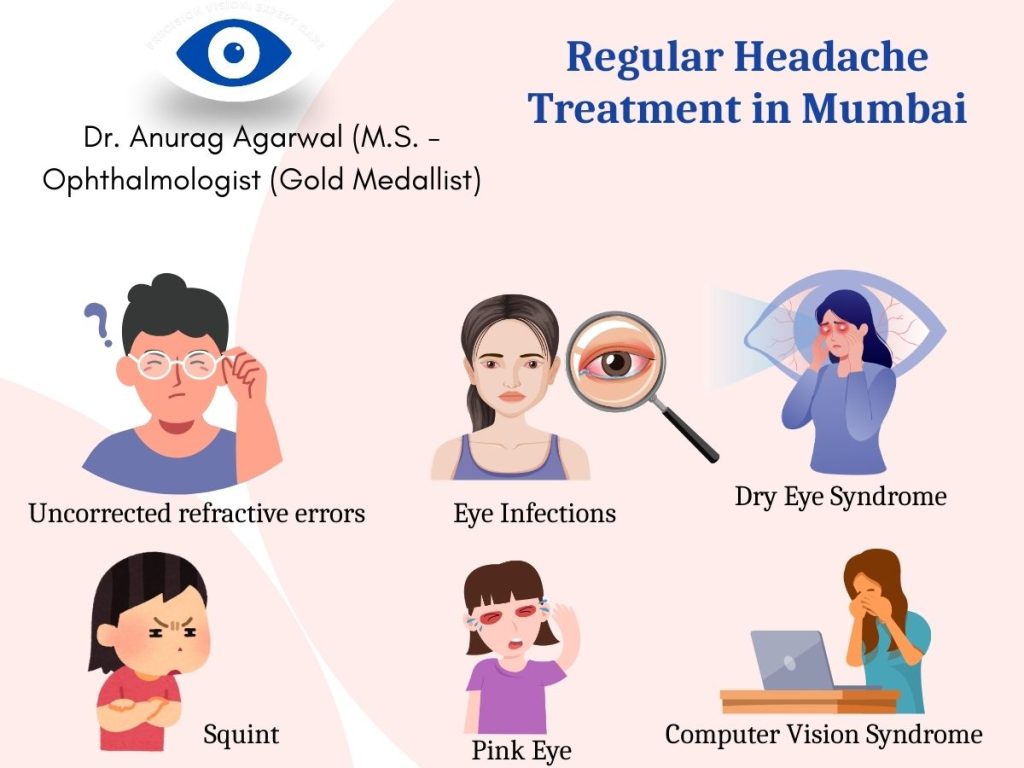
Uncorrected Refractive Errors: Refractive errors are among the most common eye-related causes of headaches. These include:
Myopia (Nearsightedness): People with myopia struggle to see distant objects clearly. When they squint or strain to see faraway things like road signs, blackboards, or television screens, it triggers headaches, particularly in the forehead and temple regions. The constant effort to focus causes eye muscle fatigue that radiates as pain.
Hyperopia (Farsightedness): Hyperopia makes it difficult to focus on nearby objects. Reading, using smartphones, or doing close work requires excessive focusing effort, leading to headaches that typically worsen throughout the day. These headaches are often accompanied by burning eyes and blurred vision after prolonged near work.
Astigmatism: This condition causes blurred or distorted vision at all distances due to irregular corneal curvature. The brain constantly tries to compensate for this distortion, resulting in persistent headaches, eye strain, and visual discomfort. Astigmatism-related headaches can occur at any time and are often described as a dull, aching pain around the eyes.
Presbyopia: Age-related presbyopia affects people typically over 40 years old, making it difficult to focus on close objects. Holding reading material at awkward distances, squinting, or straining to read small print causes significant eye strain and headaches, especially in the evening after a day of near work.
Computer Vision Syndrome (Digital Eye Strain): In our digital age, prolonged screen time has become a leading cause of eye-related headaches. Computer Vision Syndrome develops from:
Symptoms include headaches, blurred vision, dry eyes, neck and shoulder pain, and difficulty focusing. These headaches typically improve with rest but return with continued screen use.
Glaucoma: Glaucoma is a serious eye condition characterized by increased intraocular pressure that damages the optic nerve. There are two main types:
Acute Angle-Closure Glaucoma: This medical emergency causes sudden, severe headaches accompanied by:
This condition requires immediate medical attention to prevent permanent vision loss.
Chronic Open-Angle Glaucoma: While often asymptomatic in early stages, chronic glaucoma can cause mild, persistent headaches as pressure gradually increases over time.
Eye Infections and Inflammation: Various infections and inflammatory conditions can trigger headaches:
Conjunctivitis (Pink Eye): While primarily causing eye redness and discharge, severe conjunctivitis can lead to headaches due to inflammation and discomfort.
Uveitis: Inflammation of the uvea (middle layer of the eye) causes eye pain, sensitivity to light, and headaches that can be quite severe.
Keratitis: Corneal inflammation or infection causes significant pain and headaches, particularly when the eyes are exposed to light.
Dry Eye Syndrome: Insufficient tear production or poor tear quality leads to chronic eye irritation, burning, and strain. The constant discomfort and effort to maintain clear vision despite inadequate lubrication results in persistent headaches. Dry eye-related headaches are often worse in air-conditioned environments, during prolonged reading, or after screen time.
Binocular Vision Problems: Conditions affecting how both eyes work together can cause significant headaches:
Strabismus (Crossed Eyes): Misaligned eyes force the brain to work overtime trying to merge two different images, causing eye strain and headaches.
Convergence Insufficiency: Difficulty bringing both eyes together to focus on near objects creates strain during reading or close work, triggering frontal headaches.
Accommodative Dysfunction: Problems with the eye’s focusing mechanism cause headaches, particularly during tasks requiring sustained near focus.
Eye Muscle Imbalance: Even subtle imbalances in eye muscle coordination can cause the visual system to work harder than normal, resulting in chronic headaches and eye fatigue.
You should visit an eye specialist immediately if you experience:
During your consultation with Dr. Anurag Agarwal and our team, we conduct comprehensive evaluations including:
Detailed Medical History: We discuss your headache patterns, frequency, triggers, duration, and associated symptoms to understand the relationship with visual activities.
Visual Acuity Testing: This measures how clearly you can see at various distances, helping identify refractive errors.
Refraction Assessment: We determine your exact prescription needs using specialized instruments and techniques.
Eye Pressure Measurement: Tonometry tests measure intraocular pressure to screen for glaucoma.
Binocular Vision Evaluation: We assess how well your eyes work together, checking for alignment issues, convergence problems, and eye muscle coordination.
Slit Lamp Examination: This allows detailed inspection of eye structures to identify inflammation, infections, or other abnormalities.
Dilated Eye Examination: Pupil dilation enables thorough examination of the retina, optic nerve, and internal eye structures.
Visual Field Testing: This checks for peripheral vision loss that may indicate glaucoma or other conditions.
Dry Eye Assessment: We evaluate tear production and quality to diagnose dry eye syndrome.
Corrective Lenses: Prescription eyeglasses or contact lenses correct refractive errors, eliminating the strain that causes headaches. Many patients experience immediate relief once they start wearing proper correction.
Computer Glasses: Specialized lenses optimized for screen distance reduce digital eye strain and associated headaches. These may include blue light filters and anti-reflective coatings.
Prism Lenses: For binocular vision problems, prism corrections help align images, reducing the effort required for clear single vision.
Vision Therapy: Structured exercises improve eye coordination, focusing abilities, and visual processing, addressing the root cause of strain-related headaches.
Glaucoma Treatment: Depending on severity, treatment includes eye drops to reduce pressure, laser procedures, or surgery to prevent vision loss and eliminate pressure-related headaches.
Dry Eye Management: Artificial tears, prescription medications, punctal plugs, or lifestyle modifications improve tear quality and reduce strain-related headaches.
Anti-Inflammatory Medications: For uveitis or other inflammatory conditions, prescription drops or oral medications reduce inflammation and associated pain.
Lifestyle and Ergonomic Recommendations: We provide guidance on proper lighting, screen positioning, break schedules, and visual hygiene practices.
Follow the 20-20-20 Rule: Every 20 minutes of screen time, look at something 20 feet away for at least 20 seconds to reduce eye strain.
Ensure Proper Lighting: Use adequate lighting for reading and work, avoiding glare on screens. Position lights to minimize reflections.
Maintain Good Posture: Keep screens at arm’s length and slightly below eye level. Ensure proper desk and chair height.
Blink Regularly: Conscious blinking, especially during screen use, helps maintain tear film and reduces dryness.
Stay Hydrated: Adequate water intake supports tear production and overall eye health.
Take Regular Breaks: Step away from visual tasks periodically to give your eyes rest.
Get Regular Eye Examinations: Annual comprehensive eye exams detect problems early, before they cause significant symptoms.
Update Prescriptions Promptly: Vision changes over time, so keeping prescriptions current prevents unnecessary strain.
Use Proper Screen Settings: Adjust brightness, contrast, and font sizes for comfortable viewing. Consider blue light filters.
Manage Underlying Conditions: Control diabetes, hypertension, and other health issues that affect eye health.
Over our 22 years of practice in Mumbai, we have helped countless patients discover that their chronic headaches were eye-related. Many describe years of suffering, trying various pain medications, and visiting multiple specialists before finally consulting an eye doctor. The relief they experience after receiving proper vision correction or treatment is often life-changing.
One common pattern we observe is professionals who develop headaches after changing jobs or increasing screen time. Students preparing for examinations often experience worsening headaches due to prolonged reading without adequate breaks or proper lighting. Once we identify and address the underlying visual problem, these headaches typically resolve or significantly improve.
Ignoring persistent headaches or attributing them solely to stress can lead to:
Early intervention not only relieves headaches but can prevent serious eye conditions from progressing to stages where vision loss becomes irreversible.
If your headaches occur during or after visual tasks like reading or screen use, worsen throughout the day, improve with eye rest, or are accompanied by blurred vision or eye strain, they are likely eye-related. A comprehensive eye examination can provide definitive answers.
Yes, once the underlying eye problem is identified and treated appropriately, eye-related headaches typically resolve. Wearing prescribed glasses, treating dry eyes, or managing glaucoma often provides permanent relief.
Not necessarily. While many headache-causing eye problems require corrective lenses, some conditions respond to other treatments like eye drops, vision therapy, or lifestyle modifications.
Most people notice significant improvement within days to a few weeks of wearing proper correction. The brain needs a brief adjustment period to adapt to clear vision.
While most eye-related headaches result from treatable conditions like refractive errors, some can signal serious problems like acute glaucoma. Any sudden, severe headache with vision changes requires immediate medical attention.
Yes, children frequently develop headaches from uncorrected vision problems, especially as visual demands increase with schoolwork. Regular pediatric eye examinations are essential.
Yes, many neurologists recommend comprehensive eye examinations to rule out or identify eye-related causes before attributing headaches to purely neurological conditions.
Absolutely. Digital eye strain is one of the most common causes of headaches in modern life. Prolonged screen exposure without adequate breaks strains the visual system significantly.
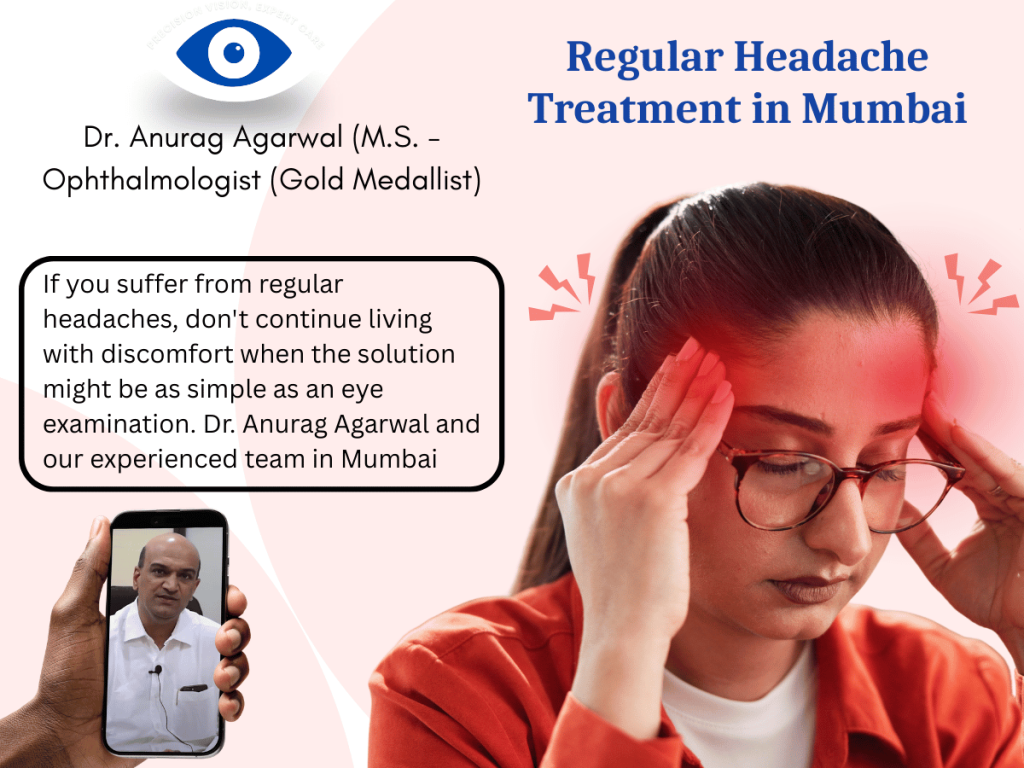
If you suffer from regular headaches, don’t continue living with discomfort when the solution might be as simple as an eye examination. Dr. Anurag Agarwal and our experienced team in Mumbai have helped thousands of patients find relief from chronic headaches by identifying and treating underlying eye conditions.
Don’t let undiagnosed eye problems rob you of comfort and productivity. Schedule a comprehensive eye examination with us today. Whether your headaches stem from simple refractive errors, digital eye strain, or more serious conditions requiring immediate attention, we have the expertise and advanced diagnostic tools to identify the cause and provide effective treatment.
Contact us now to book your appointment. Take control of your eye health and say goodbye to persistent headaches. Your path to headache-free living and optimal vision starts with a single consultation. Call our Mumbai clinic today or visit us to begin your journey toward relief and better eye health.
Contact Senior Eye Surgeon in Mumbai – Dr Anurag S. Agarwal. Dr Anurag Agarwal is available at 3 Hospitals in Mumbai Suburban.
Book an Appointment with Dr Anurag S. Agarwal Eye Clinic in Goregaon, Mumbai Suburban today to schedule an evaluation.