Eyelid Twitching Treatment in Mumbai

Eyelid twitching can be annoying, distracting, and even worrying when it does not go away. This detailed guide explains why your eyelid keeps twitching, the key medical causes behind persistent spasms, evidence-based home remedies, and when to see an eye specialist such as Dr. Anurag Agarwal in Mumbai.

What is eyelid twitching?

Eyelid twitching, medically called eyelid myokymia, is an involuntary, repetitive spasm of the muscles of the upper or lower eyelid. These twitches are usually painless and short-lived, but in some people they can become frequent, prolonged, or strong enough to interfere with daily activities.
eyelid twitching treatment in Mumbai
Eyelid twitching treatment - Dr Anurag S Agarwal

Key medical causes of persistent eyelid twitching

Eyelid twitching causes
Eyelid twitching treatment - Dr Anurag S Agarwal

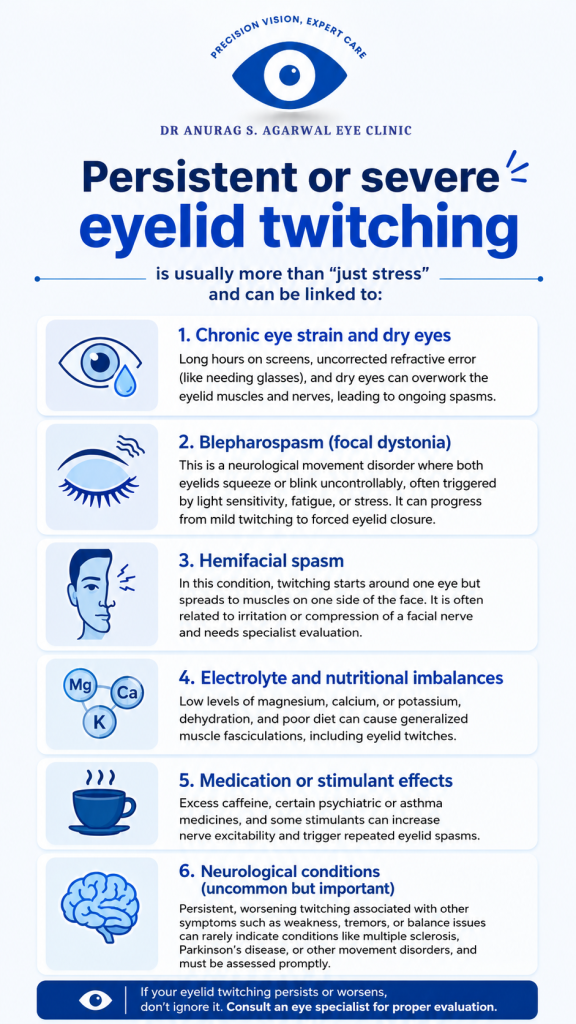
Persistent or severe eyelid twitching is usually more than “just stress” and can be linked to:

  • Chronic eye strain and dry eyes
    Long hours on screens, uncorrected refractive error (like needing glasses), and dry eyes can overwork the eyelid muscles and nerves, leading to ongoing spasms.
  • Blepharospasm (focal dystonia)
    This is a neurological movement disorder where both eyelids squeeze or blink uncontrollably, often triggered by light sensitivity, fatigue, or stress. It can progress from mild twitching to forced eyelid closure.
  • Hemifacial spasm
    In this condition, twitching starts around one eye but spreads to muscles on one side of the face. It is often related to irritation or compression of a facial nerve and needs specialist evaluation.
  • Electrolyte and nutritional imbalances
    Low levels of magnesium, calcium, or potassium, dehydration, and poor diet can cause generalized muscle fasciculations, including eyelid twitches.
  • Medication or stimulant effects
    Excess caffeine, certain psychiatric or asthma medicines, and some stimulants can increase nerve excitability and trigger repeated eyelid spasms.
  • Neurological conditions (uncommon but important)
    Persistent, worsening twitching associated with other symptoms such as weakness, tremors, or balance issues can rarely indicate conditions like multiple sclerosis, Parkinson’s disease, or other movement disorders, and must be assessed promptly.

Evidence-based home remedies to stop eyelid twitching

  • Most mild cases improve with simple, science-backed lifestyle changes and eye care:

    • Improve sleep and reduce fatigue
      Aim for 7–9 hours of quality sleep nightly and take regular breaks from screens. Following the 20-20-20 rule (every 20 minutes, look 20 feet away for 20 seconds) relaxes eye muscles and reduces strain.
    • Limit caffeine and stimulants:
      Reducing coffee, energy drinks, strong tea, and nicotine can decrease nerve and muscle overactivity. Many people notice twitching improves within days of cutting back.
    • Use warm compresses and gentle massage
      Applying a warm, clean cloth over closed eyelids for 5–10 minutes, two to three times a day, relaxes the eyelid muscles and improves blood flow. Gentle circular massage over the lid after the compress can further ease spasms.
    • Lubricate and protect the ocular surface
      Preservative-free artificial tears used several times a day help if dry eye or irritation is present. Avoid fans or air conditioners blowing directly at the face and protect eyes with sunglasses outdoors.
    • Correct underlying eye strain
      Updating your glasses prescription, using anti-glare filters, and adjusting screen brightness and distance can significantly reduce strain-induced twitching.
    • Supportive nutrition and hydration
      Staying well hydrated and including magnesium-rich foods (nuts, seeds, leafy greens), calcium, and B vitamins supports normal nerve and muscle function. Any supplements should be discussed with a doctor, especially if you take other medicines.
    • Stress reduction techniques
      Breathing exercises, yoga, meditation, and short walks can lower stress hormones that contribute to nerve overactivity, especially in a busy city environment.

When to Consult a eye doctor for eye twitching?

While occasional twitching is usually harmless, medical review is recommended when:

    • The twitching lasts longer than 1–2 weeks despite good rest and home care
    • The eyelid closes completely with each spasm or the eye is difficult to open
    • Twitching spreads to other parts of the face or one side of the face
    • There is associated eye pain, redness, discharge, vision changes, or drooping of the eyelid
    • There is a history of neurological disease, recent head or eye injury, or new medications
    • Twitching is frequent and affecting work, driving, or reading

An eye specialist such as Dr. Anurag Agarwal in Mumbai can perform a detailed eye examination, check for dry eye or refractive issues, evaluate the eyelid and facial muscles, and decide whether further neurological assessment or imaging is needed. Treatments may include prescription lubricants, managing dry eye or blepharitis, adjusting medications, or in more severe cases, targeted Botulinum toxin (Botox) injections to relax overactive muscles.

If eyelid twitching is bothering you regularly, interferes with your lifestyle, or makes you anxious, booking an appointment with an eye surgeon experienced in eyelid and neurological eye conditions is the safest way to get clarity and lasting relief.

Book Appointment for Eye Twitching Treatment in Mumbai - Dr Anurag S. Agarwal Eye Clinic

If eyelid twitching is bothering you regularly, interferes with your lifestyle, or makes you anxious, booking an appointment with an eye surgeon experienced in eyelid and neurological eye conditions is the safest way to get clarity and lasting relief.

© Dr Anurag S. Agarwal Eye Clinic. Privacy Policy