
© Dr Anurag S. Agarwal Eye Clinic. Privacy Policy
Powered by PRAZONE Web Solutions
As a team of experienced ophthalmologists led by Dr. Anurag Agarwal, practicing in Mumbai for over 22 years, we have seen countless patients develop cataracts due to prolonged ultraviolet (UV) radiation exposure. Many people diligently protect their skin from sun damage but overlook their eyes, which are equally vulnerable. In this comprehensive guide, we will explain how UV rays contribute to cataract formation and provide practical strategies to protect your eyes from this preventable cause of vision loss, as explained by Expert Eye Specialist in Mumbai, Cataract development and UV Exposure – Dr Anurag S Agarwal.
Ultraviolet radiation is invisible light energy emitted by the sun. While we cannot see UV rays, they penetrate deep into eye tissues, causing cumulative damage over time. Just as UV exposure causes sunburn and skin cancer, it damages the delicate structures of the eye, particularly the lens, leading to cataract development.
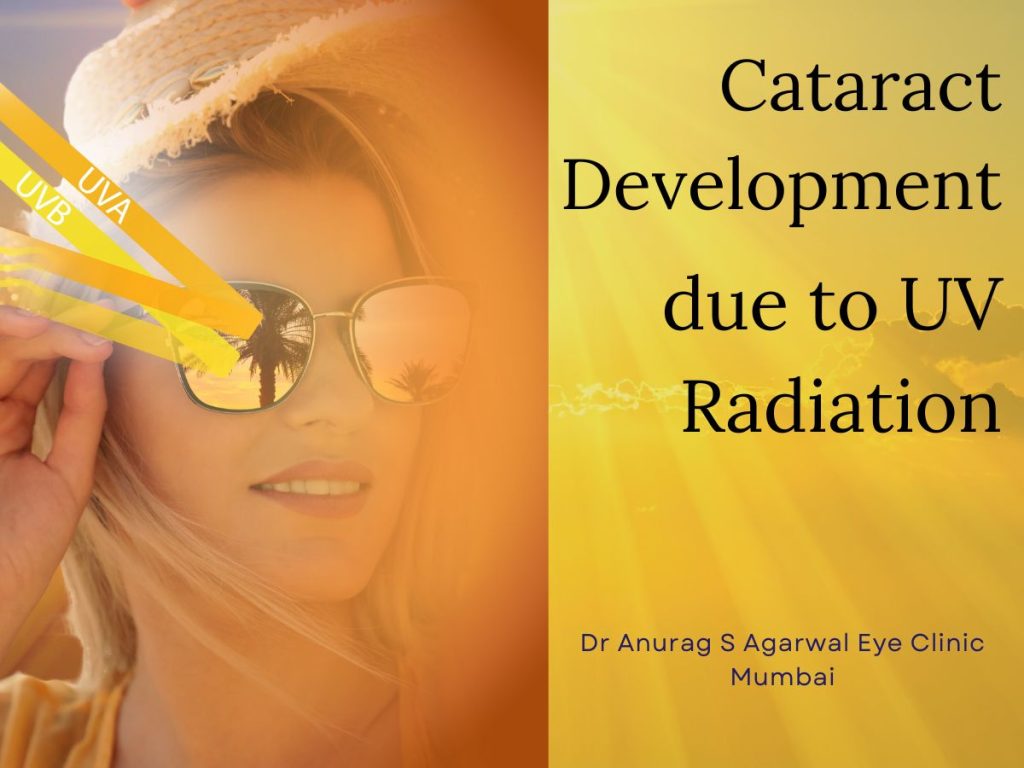
UVA Rays: UVA rays have longer wavelengths and penetrate deeply into the eye, reaching the lens and retina. These rays are present throughout the day, even on cloudy days, and can pass through windows. UVA radiation contributes significantly to cataract formation and retinal damage.
UVB Rays: UVB rays have shorter wavelengths and are more intense than UVA. They primarily affect the front structures of the eye, including the cornea and lens. UVB rays are strongest between 10 AM and 4 PM and are the primary cause of sunburn-like damage to the eyes.
UVC Rays: UVC rays are the most dangerous but are fortunately absorbed by the Earth’s atmosphere and do not reach the surface under normal circumstances.
Oxidative Stress and Free Radical Formation: When UV radiation strikes the lens, it generates harmful molecules called free radicals. These unstable molecules attack the proteins and enzymes in the lens, causing them to break down and clump together. This clumping creates cloudy areas that characterize cataracts.
Protein Damage: The lens contains specialized proteins called crystallins that must remain perfectly arranged to maintain transparency. UV radiation disrupts these proteins, causing them to denature and aggregate. Once damaged, these proteins cannot repair themselves, leading to progressive clouding.
DNA Damage: UV rays damage the DNA in lens cells, impairing their ability to function properly and maintain lens clarity. This genetic damage accumulates over time, accelerating cataract formation.
Antioxidant Depletion: The lens contains natural antioxidants like glutathione and vitamin C that protect against UV damage. Prolonged UV exposure depletes these protective substances, leaving the lens vulnerable to oxidative injury.
Cumulative Effect: UV damage to the eyes is cumulative, meaning it builds up over a lifetime. Each exposure adds to the total damage, which is why cataracts often develop in older individuals who have accumulated decades of sun exposure.
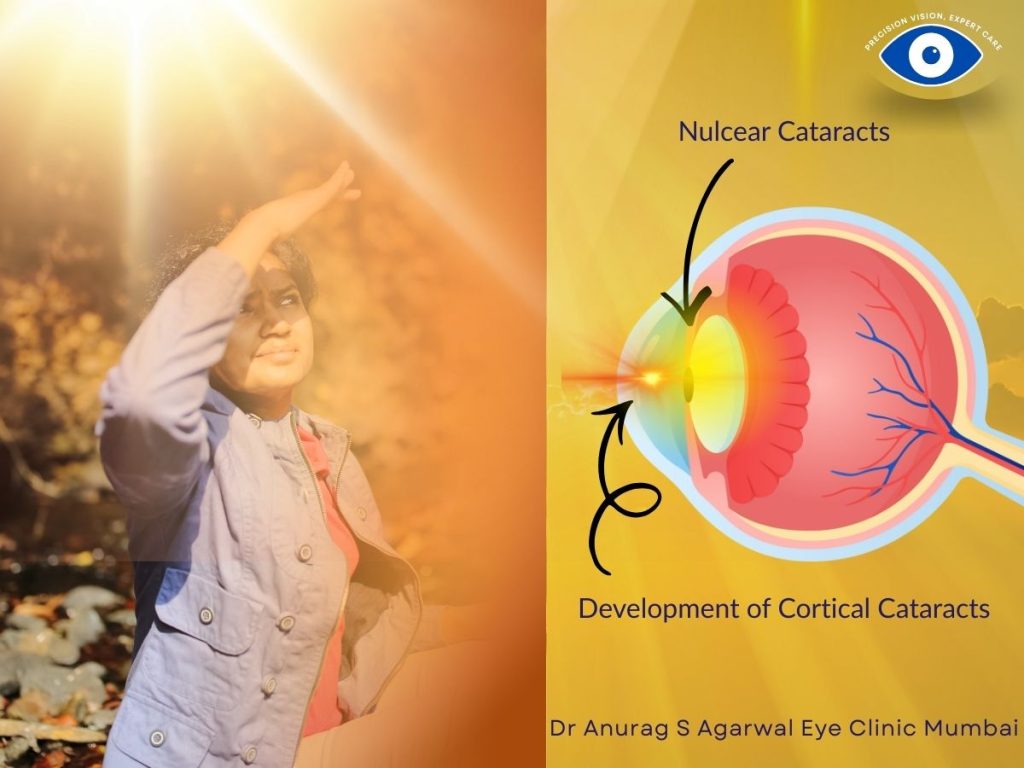
Cortical Cataracts: These cataracts form in the outer layer (cortex) of the lens and appear as white, wedge-shaped opacities that extend from the periphery toward the center. UV exposure is strongly linked to cortical cataract development. These cataracts cause problems with glare and light scattering.
Nuclear Cataracts: These develop in the central part (nucleus) of the lens, causing it to harden and turn yellow or brown. While primarily age-related, UV exposure accelerates their formation. Nuclear cataracts affect distance vision and color perception.
Posterior Subcapsular Cataracts: These form at the back of the lens and are associated with UV exposure combined with other factors like steroid use or diabetes. They cause significant glare and difficulty reading.
Geographic Location: People living closer to the equator receive more intense UV radiation year-round. In Mumbai, the tropical location means higher UV exposure, making eye protection particularly important.
Altitude: UV intensity increases approximately 10% for every 1,000 meters of elevation. Mountain residents and frequent trekkers face higher exposure.
Outdoor Occupation: Farmers, construction workers, fishermen, traffic police, and others who work outdoors accumulate significantly more UV exposure than indoor workers.
Outdoor Recreation: Activities like cricket, tennis, golf, swimming, beach visits, and hiking expose eyes to prolonged UV radiation.
Time of Day: UV rays are strongest between 10 AM and 4 PM. Outdoor exposure during these hours is particularly damaging.
Seasonal Variations: UV intensity peaks during summer months, though significant exposure occurs year-round in Mumbai’s climate.
Reflective Surfaces: Water, sand, snow, and concrete reflect UV rays, increasing total exposure. Beach-goers and those near water bodies face doubled UV exposure from direct and reflected rays.
Cloud Cover Myths: Many people believe cloudy days are safe, but up to 80% of UV rays penetrate clouds. Overcast days still require eye protection.
Age: Children’s eyes are more vulnerable to UV damage because their lenses transmit more UV radiation to the retina. Early protection is crucial.
Lack of Protection: Not wearing sunglasses or hats leaves eyes completely vulnerable to UV damage.
Multiple international studies confirm the UV-cataract connection:
Watch for these warning signs of excessive UV exposure:
Choose Proper Sunglasses: This is your primary defense against UV damage:
100% UV Protection: Always select sunglasses labeled “100% UV protection,” “UV400,” or “100% UVA and UVB protection.” These block all harmful rays up to 400 nanometers.
Quality Matters: Purchase sunglasses from reputable sources. Cheap, unverified sunglasses without proper UV coating can be more harmful than no sunglasses, as dark lenses dilate pupils, allowing more UV penetration.
Prescription Sunglasses: If you wear corrective lenses, invest in prescription sunglasses or clip-on UV filters. Transition lenses in regular glasses offer another convenient option.
Wear Wide-Brimmed Hats: Combine sunglasses with hats for optimal protection:
Seek Shade During Peak Hours: Minimize outdoor exposure between 10 AM and 4 PM when UV rays are strongest. When outdoors during these hours, seek shade under trees, umbrellas, or covered structures.
UV-Blocking Contact Lenses: Some contact lenses offer UV protection as an additional layer of defense. However, these should supplement, not replace, sunglasses, as they do not cover the entire eye surface.
Protective Eyewear for Sports and Work: For outdoor activities and occupations:
Window Film and Car Tinting: While car windshields typically block UV rays, side windows may not. Consider UV-blocking window film for vehicles and homes, especially if you spend significant time driving or near windows.
Educate Children Early: Children’s eyes are more vulnerable to UV damage:
Regular Eye Examinations: 👓
Schedule annual comprehensive eye examinations with Dr. Anurag Agarwal and our team to detect early signs of UV damage or cataract formation. Early detection allows for timely intervention.
Nutritional Protection: Support your eyes’ natural defenses against UV damage:
Antioxidant-Rich Foods: 🥜🥥
Supplements: Consider antioxidant supplements if your diet is insufficient, but consult your doctor first.
Hydration: Adequate water intake supports overall eye health and tear production, which provides some natural UV protection. 🫗
Tropical Climate Challenges: Mumbai’s tropical location means year-round intense UV exposure. Unlike temperate regions where UV intensity varies dramatically by season, Mumbai residents face consistent risk throughout the year.
Coastal Environment: Proximity to the Arabian Sea means increased UV exposure from water reflection. Marine Drive, beaches, and waterfront areas require extra eye protection.
High Humidity: While humidity doesn’t directly affect UV intensity, it can make wearing sunglasses uncomfortable. Choose well-ventilated frames with anti-fog coatings for Mumbai’s climate.
Urban Heat Islands: Mumbai’s urban environment with reflective buildings and concrete surfaces increases overall UV exposure through reflection.
Outdoor Lifestyle: Mumbai’s vibrant outdoor culture, from beach visits to cricket matches to marine drives, means residents spend considerable time in UV-rich environments.
Unfortunately, UV damage is cumulative and permanent. However, protecting your eyes now prevents additional damage and slows cataract progression.
No. Only sunglasses labeled with 100% UV protection or UV400 provide adequate protection. Fashion sunglasses without certification may offer no protection.
Yes. Even limited exposure accumulates over time. Additionally, UV rays penetrate windows, affecting people who spend time near windows.
Most modern prescription lenses include UV protection, but verify with your optician. Consider adding transition lenses or keeping prescription sunglasses for outdoor use.
As early as possible. Infants and toddlers benefit from UV protection during outdoor activities. Make it a habit from the start.
While unnecessary indoors, it won’t harm your eyes. However, very dark lenses indoors may cause difficulty seeing and increase fall risk.
Yes. Intense UV exposure, such as from snow reflection or water glare, can cause photokeratitis (eye sunburn) with immediate symptoms of pain and light sensitivity.
No eye drops provide UV protection. Physical barriers like sunglasses and hats are essential.
No. UV protection slows cataract progression and protects the other eye if only one is affected. It also reduces risk of other UV-related conditions.
Check for a UV400 or 100% UV protection label. If uncertain, many optical shops can test sunglasses for UV protection.
Myth: Cloudy days are safe: Reality: Up to 80% of UV rays penetrate clouds. Always wear protection outdoors.
Myth: I only need sunglasses in summer: Reality: UV rays are present year-round. Protect your eyes in all seasons.
Myth: Darker sunglasses provide better protection: Reality: UV protection comes from special coatings, not lens darkness. Always check for UV400 certification.
Myth: I’m safe indoors: Reality: UV rays penetrate windows, particularly UVA. Consider window film for extensive sun exposure through windows.
Myth: Children don’t need sunglasses: Reality: Children’s eyes are more vulnerable. Early protection prevents lifetime cumulative damage.
Myth: Expensive sunglasses are always better: Reality: Price doesn’t guarantee UV protection. Check certification regardless of cost.
The Cost of Not Protecting Your Eyes:
Neglecting UV protection leads to:
Consistent UV protection throughout life offers remarkable benefits:
Making UV protection habitual requires simple adjustments:
Don’t let preventable UV damage rob you of clear vision in your later years. Dr. Anurag Agarwal and our experienced team in Mumbai are committed to helping you protect your eyes from UV-related cataracts and other sun-induced eye conditions.
Schedule a comprehensive eye examination with us today. We will assess your current eye health, evaluate any existing UV damage, and provide personalized recommendations for protecting your vision. Whether you need guidance on proper sun protection, monitoring of early cataracts, or treatment for advanced UV-related eye conditions, we offer expert care tailored to Mumbai’s unique environmental challenges.
Contact our Mumbai clinic now to book your appointment. Invest in your eye health today to enjoy clear vision tomorrow. Simple protective measures now can prevent years of vision problems later. Call us today or visit our clinic to begin your journey toward lifelong eye protection. Your eyes deserve the same care and attention you give your skin – start protecting them from UV damage today.
Remember: the sun’s effects on your eyes are cumulative and irreversible. Every day without protection adds to your lifetime damage. Make today the day you commit to UV protection. Your future self will thank you for the gift of clear, healthy vision.
Contact Senior Eye Surgeon in Mumbai – Dr Anurag S. Agarwal. Dr Anurag Agarwal is available at 4 Hospitals in Mumbai Suburban.
Book an Appointment with Dr Anurag S. Agarwal Eye Clinic in Goregaon, Mumbai Suburban today to schedule an evaluation.